What if the page
could carry the voice?
I explored how typography could make oral rhythm, emphasis, and imagery visible for Deaf and hard-of-hearing children.
The learning challenge
Oral reading can remain flat in intonation. Uniform typesetting offers few cues to dialogue, onomatopoeia, emphasis, movement, or prosodic change.
My role
I researched, designed prototypes and booklets, and facilitated a class and workshop with Kyoto Prefectural School for the Deaf.
Giving rhythm
a visual language.
A demonstration of the design principle. The word stays the same; its visual emphasis changes.

Emphasis has weight.
Size and stroke weight express differences in emphasis and intensity.
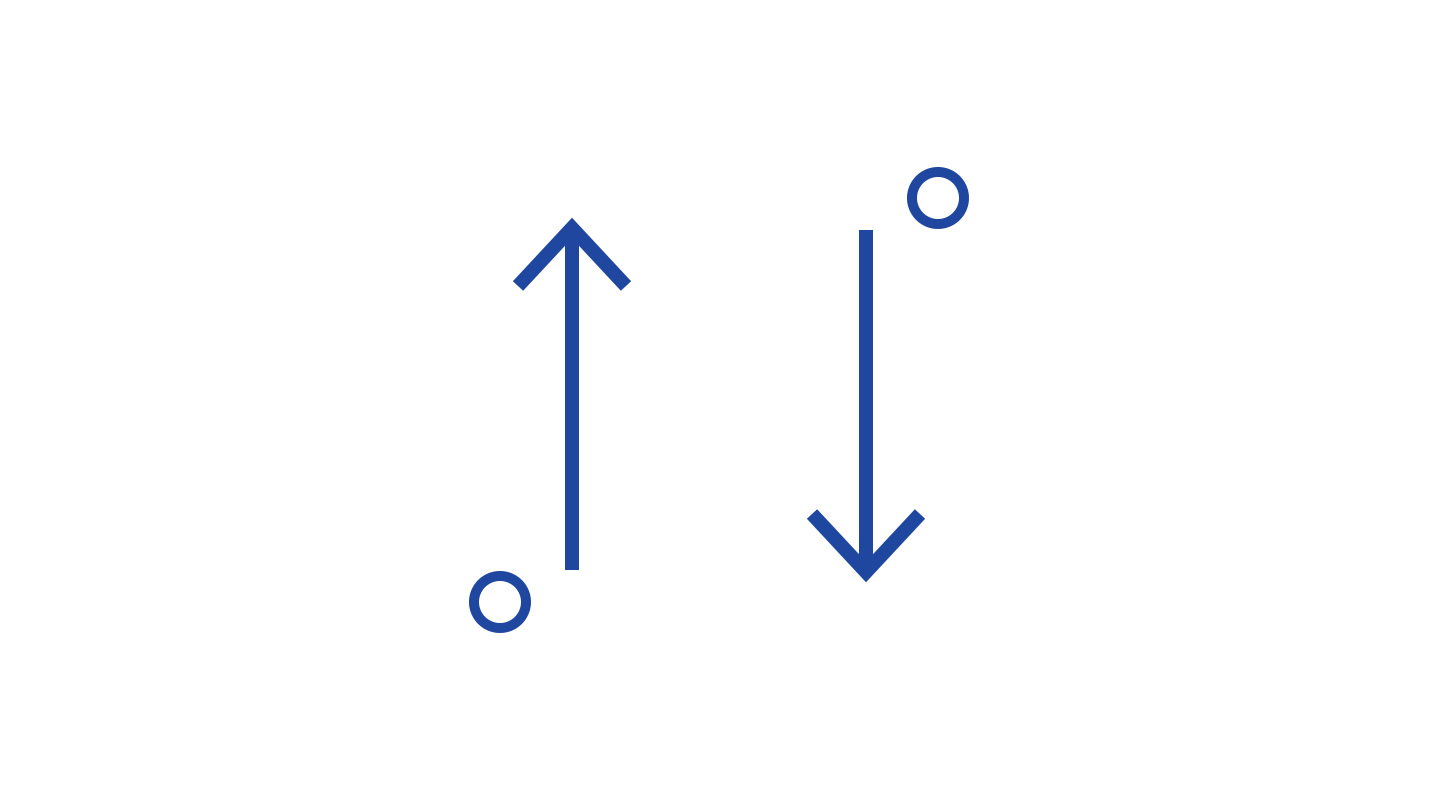
Placement carries movement.
The position of a word reflects spatial imagery and changes in movement.
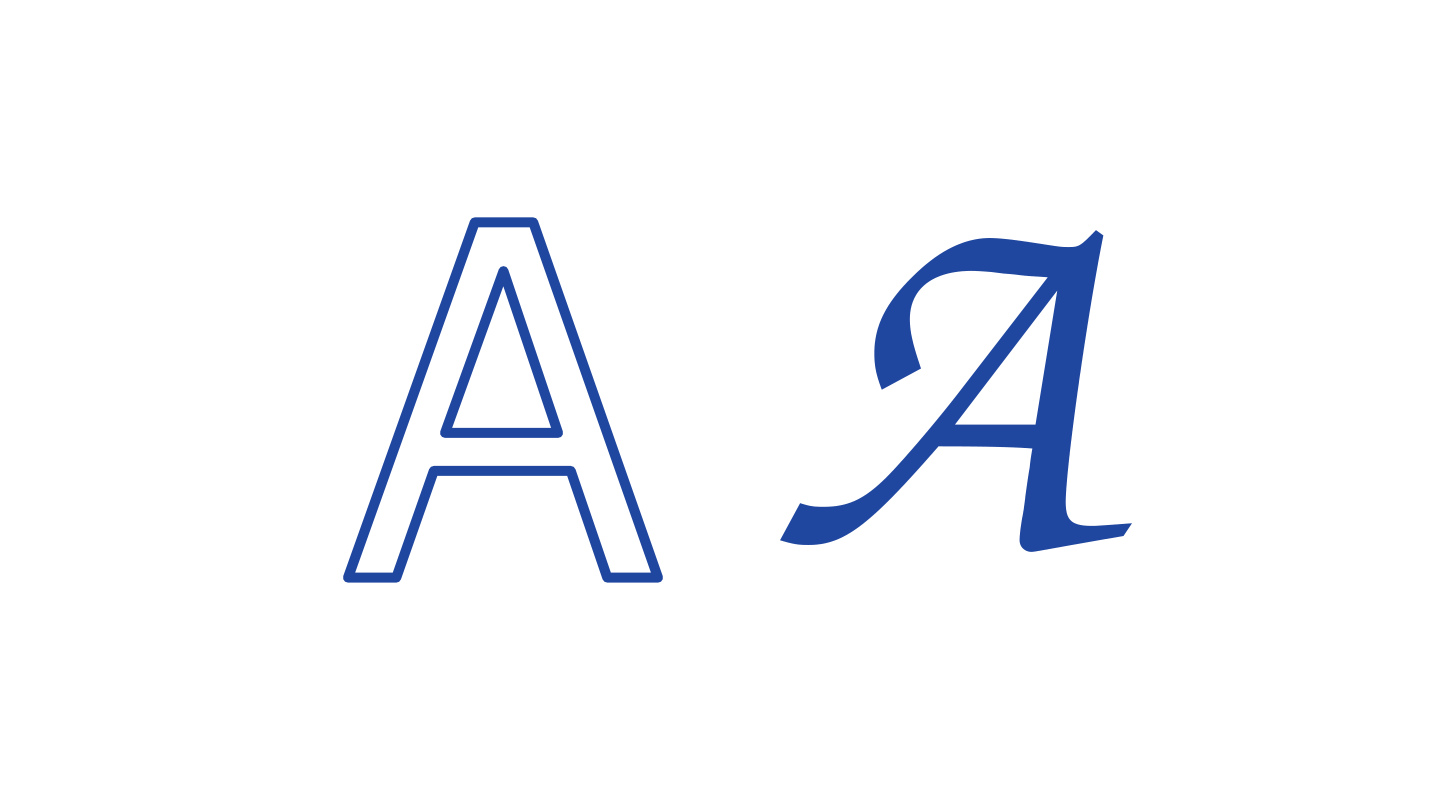
A different voice, a different form.
Handwritten lettering distinguishes dialogue and individual voices.

Sound becomes expressive type.
Custom lettering gives onomatopoeia and sound effects a visible character.
From an idea
to something children could use.
- 01
Discover
Literature review
- 02
Define
Interviews · observation · survey
- 03
Develop
Prototypes · teacher feedback · booklet
- 04
Deliver
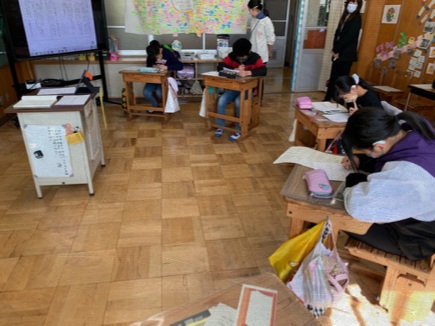
Class · workshop · student expression

Four approaches, including poetry by Shuntaro Tanikawa, explored lightness and heaviness through placement and intonation through tonal density. After teacher feedback, I developed a booklet using the Grade 5 story Daizō Jiisan and Gan (Mitsumura Tosho).
Reading the page.
Then making it their own.
- 01Read the designed booklet
- 02Express a scene with typography, pens, and crayons
- 03Present the work
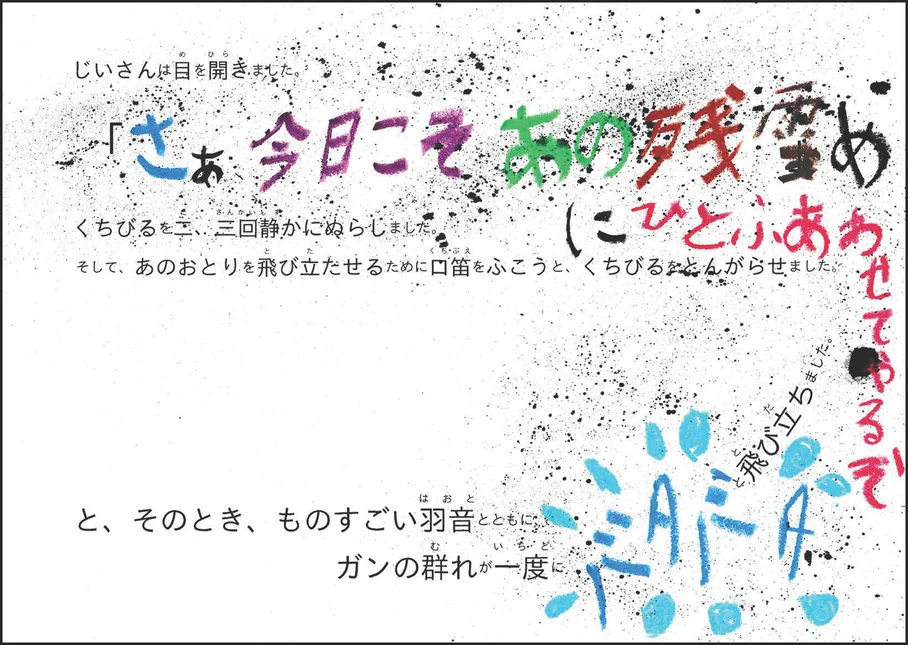
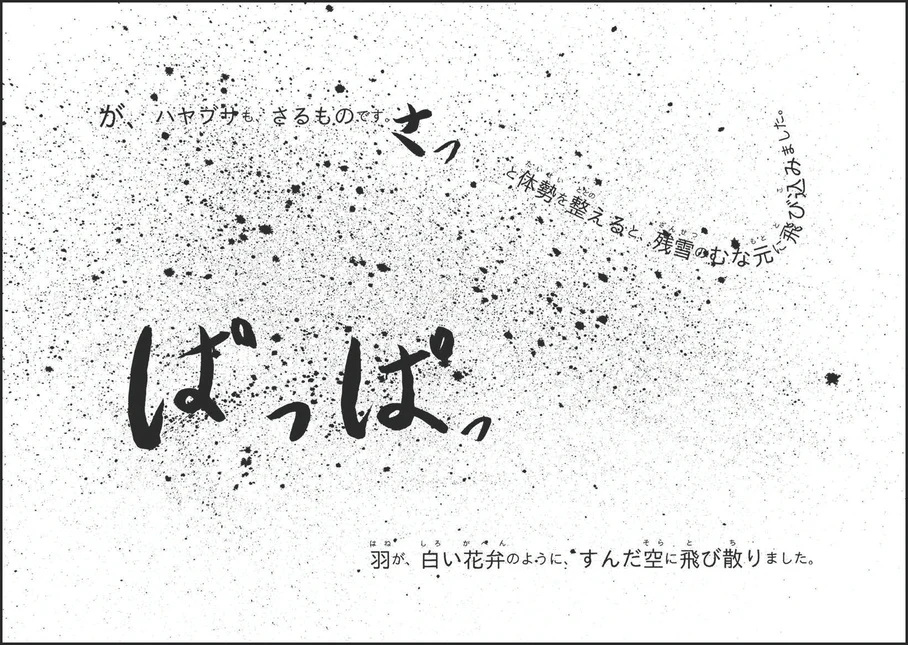
“It was easier to understand emotions and imagine the scene than with the textbook.”STUDENT FEEDBACK / CLASSROOM WORKSHOP
“Students read with more varied intonation than usual.”TEACHER FEEDBACK / CLASSROOM WORKSHOP
These comments are qualitative observations from a small classroom activity. Further testing would be needed to establish learning effects across learners, texts, and settings.
Two ways
into the same text.
Listening booklet
- STARTING MATERIALText
- DESIGN OPERATIONVisual cues
- LEARNER ACTIVITYInterpretation
The “listening” booklet makes rhythm, intonation, and imagery visible through visual prosody cues.
Reading booklet
- STARTING MATERIALImagery
- DESIGN OPERATIONType design
- LEARNER ACTIVITYExpression
The “reading” booklet supports learners in expressing auditory imagery and their interpretation through typographic design.
Possible uses beyond this classroom
Experienced home-learning language-material planners and editors suggested uses beyond textbooks, including home settings.
- Support textbook comprehension, especially dialogue and onomatopoeia.
- Offer another way to assess understanding when oral output is difficult.
- Connect Japanese language and art, and create a communication tool among students.
- Explore home learning and use with hearing children, with further testing across texts and settings.