From research
to service priorities.
I helped an industrial machinery client turn field research into a prioritized inspection and maintenance portfolio, with preparation for the next phase.
The challenge
An aging workforce, labor shortages, and inefficient maintenance operations created a need to redesign processes and scale service delivery.
My responsibility
I managed a team of five, integrating research, workshops, and deliverables to meet the schedule, scope, and required quality.
Listen closely.
Give the findings a structure.
- 01
Discover
Desk research + field insights
Methods & outputs
Research industry trends, regulations, cross-industry and global cases; gather field insights through stakeholder interviews and a service-shop survey.
- 02
Define
Findings → shared priorities
Methods & outputs
Structure field-grounded themes and priorities, including inspection digitalization and efficiency, and clarify knowledge and maintenance needs beyond the client’s own products.
- 03
Develop
Hypotheses → rated directions
Methods & outputs
Facilitate workshops, form solution hypotheses, and map People / Service & operations / Capital. Use a rating matrix to prioritize directions and develop solution cards.
- 04
Prepare
Feasibility → next-phase plan
Methods & outputs
Deepen selected solutions, assess feasibility through additional stakeholder interviews, and prepare PoC requirements, ROI and investment-effect inputs, and a roadmap to align the next steps.
Working through the issues
with the team.
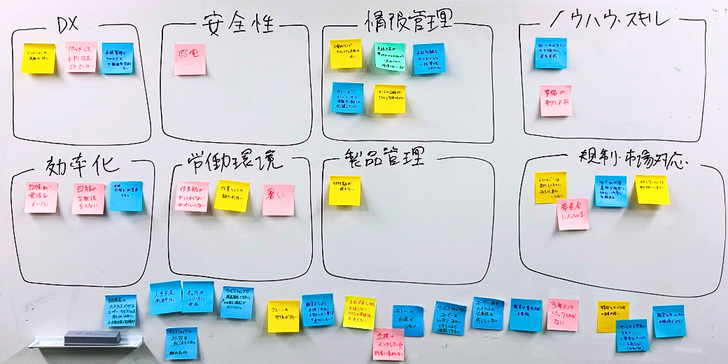
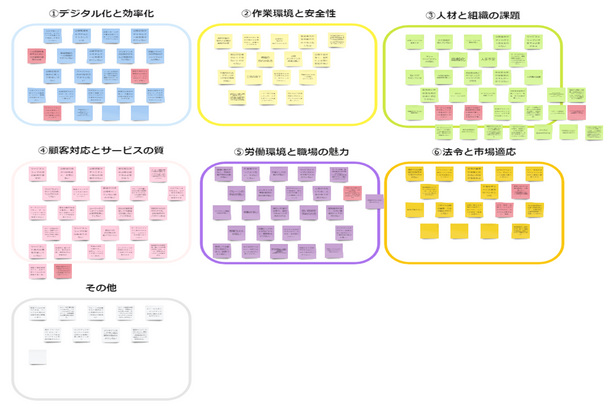
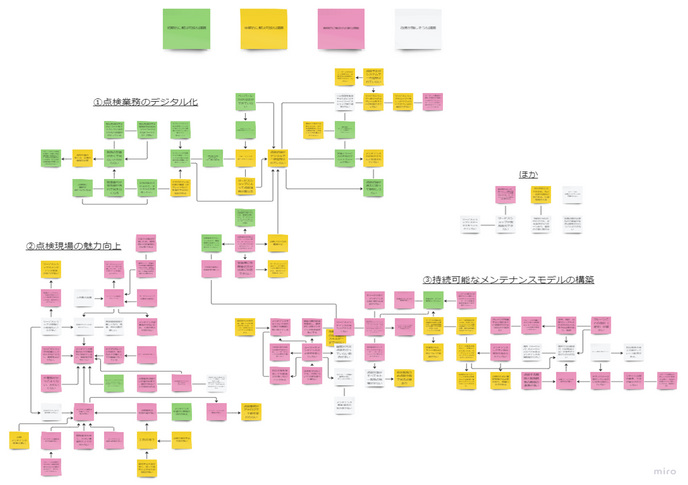
I designed and facilitated three cross-functional workshop rounds and synthesized their outputs in Miro into a solution map and prioritized portfolio.
A framework for
33 solutions.
I consolidated 33 solutions across People, Service & operations, and Capital. The framework connects the people delivering the service, its operations, and the business model that sustains it.
Choose a lens to trace its connection to the shared objective. Open any theme to read its subcategories.
Three lenses share one objective. Explore the 14 published subcategories within the framework.
Sustainable service industry
People
3.1 / Talent acquisition
- 3.1.1 Strengthening recruitment
- 3.1.2 Leveraging external resources
3.2 / Organizational restructuring
- 3.2.1 Scaling the organization
- 3.2.2 Reorganizing teams and roles
3.3 / Talent development & capability building
- 3.3.1 Talent development & capability building
3.4 / Retention
- 3.4.1 Improving the work environment
- 3.4.2 Enhancing the attractiveness of the profession
Service & operations
2.1 / Operational efficiency
- 2.1.1 Digitization of operations
- 2.1.2 Standardization of operations
- 2.1.3 Strengthening sales capabilities
2.2 / Value enhancement
- 2.2.1 Product innovation
- 2.2.2 Value proposition redesign
2.3 / Strengthening service strategy
- 2.3.1 Strengthening go-to-market strategy
Capital
1.1 / Business model transformation
- 1.1.1 Improving monetization
The project consolidated 33 solutions. This framework shows the published categories and 14 subcategories, rather than a full 33-item catalog.
What we prepared
for the next phase.
- A solution map and prioritized portfolio supported by a rating matrix.
- A detailed solution catalog, with selected directions developed into solution cards.
- Workshop plans, facilitation, and synthesized outputs.
- A consolidated research base from interviews, the service-shop survey, and desk research.
- Next-phase preparation: PoC requirements, ROI and investment-effect inputs, and a roadmap.
The engagement concluded with strategy development and feasibility preparation for the next phase. The results shown here do not include implementation outcomes or realized financial returns.
- 01
Current-state research
Desk research, interviews, and service-shop survey
- 02
Ideation
Workshops, solution development, and prioritization
- 03
Feasibility validation
Additional interviews, PoC requirements, ROI inputs, and roadmap
Workstreams overlapped during the engagement; exact phase start and end dates are not specified.
Explore four sample solution cards
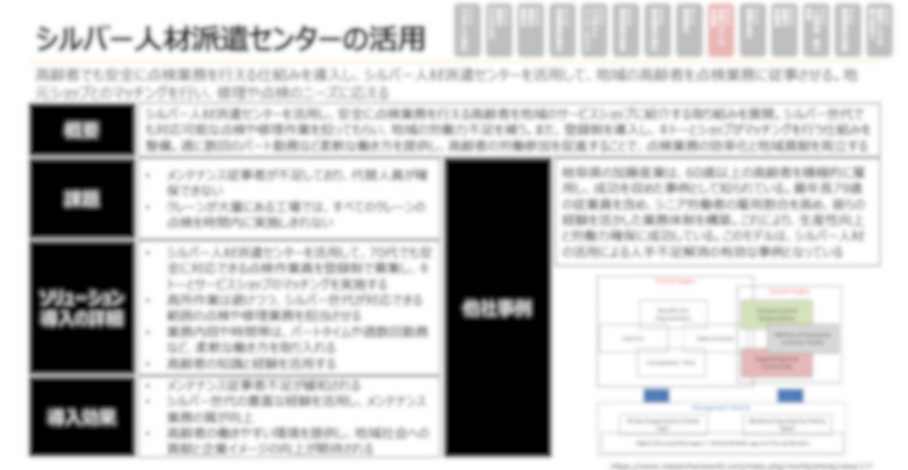
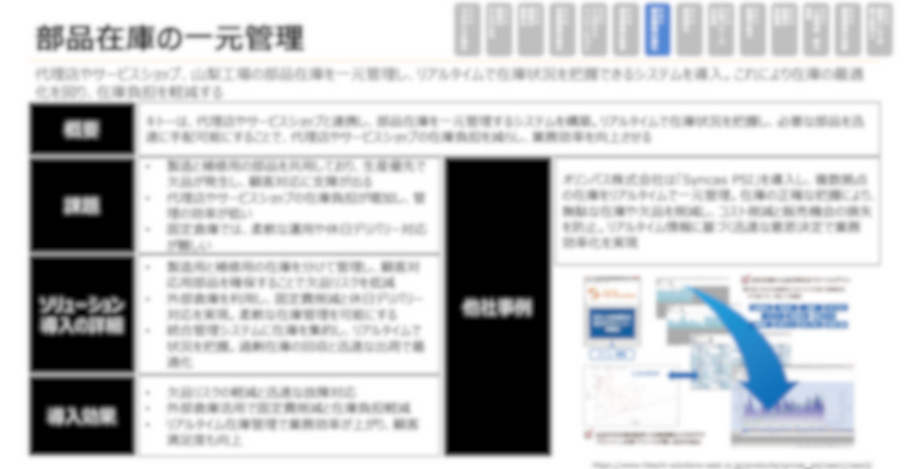
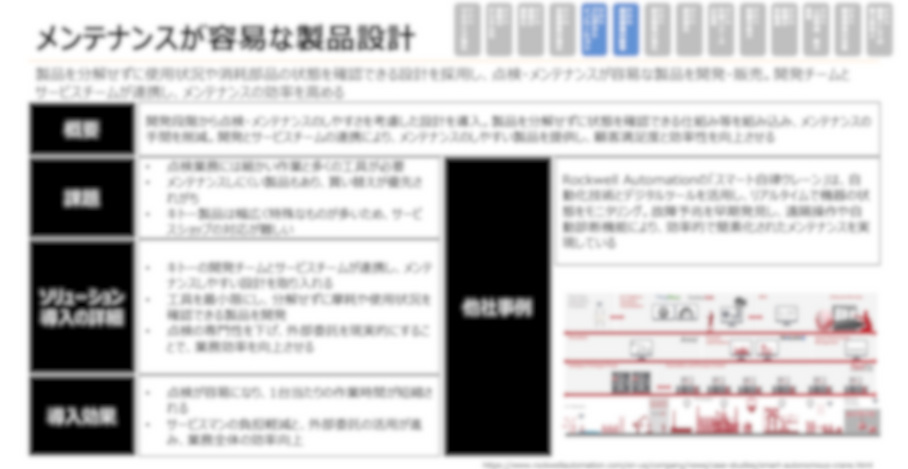
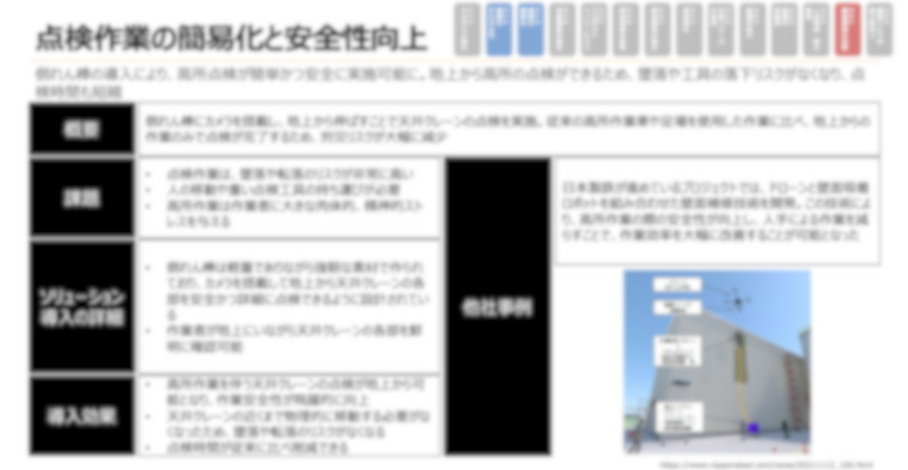
The source screenshots contain small, low-resolution text. These are examples of the deliverable format; unreadable details have not been reconstructed.